
- HOME
- Careers
- Researchers' Voices
- Cutting-Edge Science in a Safe, Supportive Environment: Haniyeh Bidadi at WPI-PRIMe
Cutting-Edge Science in a Safe, Supportive Environment: Haniyeh Bidadi at WPI-PRIMe
May 28, 2026
Cutting-Edge Science in a Safe, Supportive Environment: Haniyeh Bidadi at WPI-PRIMe
Note: Interviewed in January 2026. Positions and titles are current as of the time of the interview.
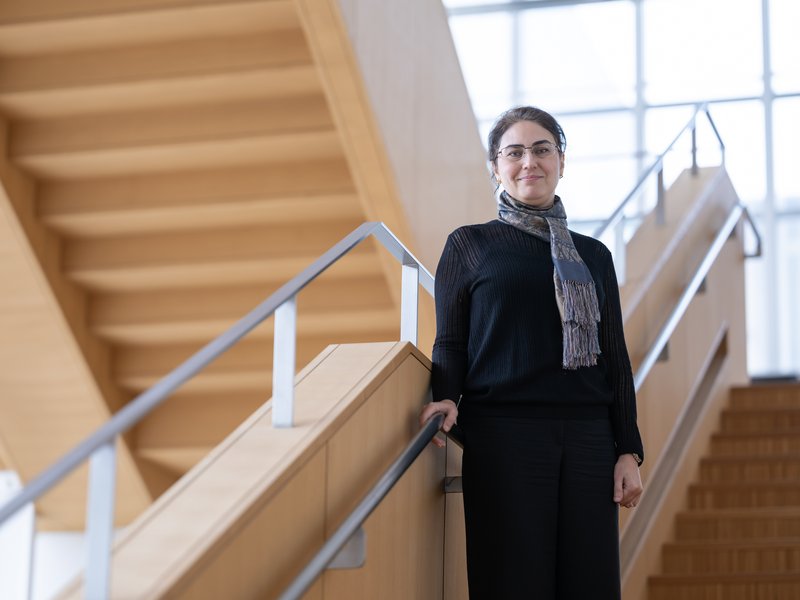
Haniyeh Bidadi, Associate Professor (lecturer), at the University of Osaka, Premium Research Institute for Human Metaverse Medicine (WPI-PRIMe).
An Inspiring Vision—Plus New Possibilities for Personal Growth
WPI-PRIMe has an ambitious mission: to conquer disease by pioneering the field of “human metaverse medicine.” One key tool for this will be “Bio-Digital Twins”: virtual human bodies, accurate to the level of individual organs, in which simulations of diseases and other biological processes can be run to provide insight for researchers and clinicians. The prospect of being part of this effort was a major part of Bidadi’s initial interest in the center.
“If WPI-PRIMe succeeds, it will be a breakthrough,” says Bidadi. “Not many are taking on this challenge, and it’s good motivation to be part of such a cutting-edge project.”
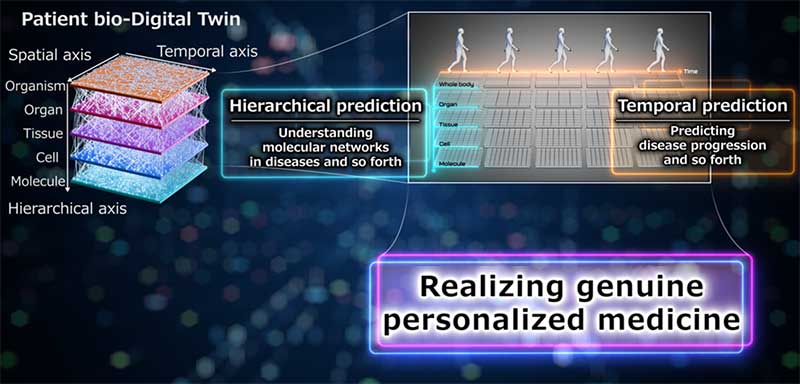
Definition of Patient Bio-Digital Twin
The career path that brought Bidadi to WPI-PRIMe was anything but direct. After earning her bachelor’s degree in Iran, she completed her master’s, Ph.D., and postdoctoral research in Japan. Her doctoral work focused on molecular biology, growth, and development in plant systems. During her postdoctoral research, she worked on producing animal component-free biomedicines, including cytokines for regenerative medicine and stem cell research, as well as antibodies, vaccines, and recombinant proteins using transgenic rice.
“I enjoy gaining diverse experiences, so after my postdoctoral research I also worked in venture companies, moving between academia and industry,” says Bidadi. “Later, I came across an opening in university research administration at WPI-PRIMe. I saw it as a chance to combine my background in science, industry, and academia while learning further about the advanced human medicine research taking place here.”
Administrative and Personal Support Helps Researchers Focus on Research
Bidadi now plays a vital administrative role at WPI-PRIMe, both organizing seminars and symposia and supporting its members.
“The seminars are organized and arranged in close contact with PIs, who suggest speakers for us to invite,” says Bidadi. “Our international symposia are also tightly connected to committee members. I handle communications and organization in close contact with our promotion team.” Bidadi sees promotion as key for an institute like WPI-PRIMe, because publicizing successes brings researchers proper recognition and helps to attract new talent.
Helping international researchers feel safe and supported is something Bidadi feels strongly about. Along with offering formal administrative assistance and advice, she occasionally has lunch with individual researchers who need someone to talk to. Topics can range from research setbacks to the challenges of adjusting to life in Japan. “I always try to support our researchers, because I have experienced the similar issues,” she says. “I try to help them feel safe and, in a way, at home, which is the best thing you can do for someone outside their country. This also lets them focus more on experiments and research.”
Bidadi is also on WPI-PRIMe’s committee for equality, diversity, inclusion, and belonging (EDIB), helping to prepare a statement now posted on their website as a public commitment to these principles. “We plan to organize seminars and workshops featuring specialists in EDIB and internationalization to further promote and advance diversity at our institute,” she says.
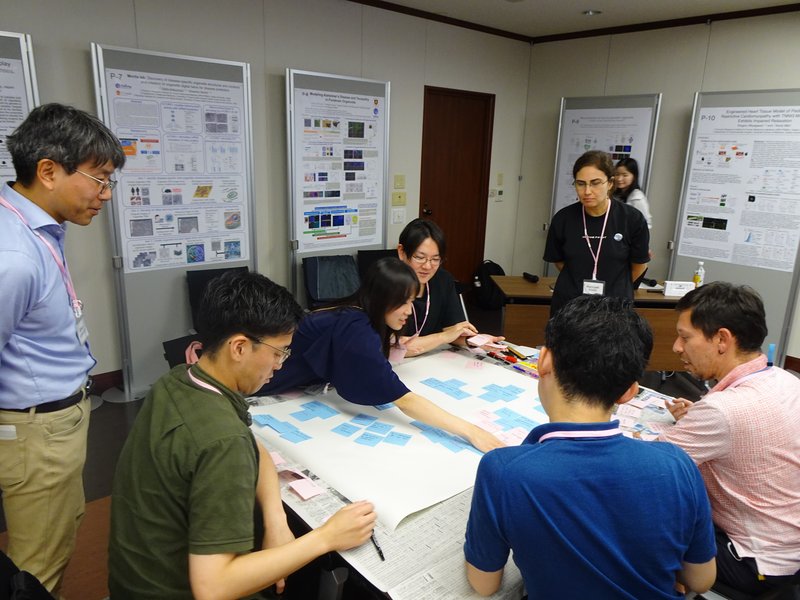
WPI-PRIMe is an institute with diverse members, therefore face-to-face communication is important. URAs including Bidadi supports internal events to cultivate the outputs.
Collaboration Woven Throughout the Center’s Activities
Bidadi feels that the main appeal of WPI-PRIMe for researchers is combining cutting-edge science with opportunities for collaboration. “As you know, AI Technology and science move rapidly today,” she says. “The novel work being done here is highly attractive to scientists looking to make a difference.”
Collaboration within WPI-PRIMe is encouraged with a monthly “happy hour” where researchers can network with each other. These, Bidadi says, are a valuable opportunity for overseas researchers in particular to both see each other and talk to Japanese researchers and PIs at the center. “We have members from Chile, France, Middle Eastern countries, China, Sweden . . . all of them can meet and mingle at happy hour.”
The seminars and symposia that Bidadi supports and organizes are opportunities to create further international exchange and collaboration between the speakers, as well as among WPI-PRIMe PIs and invited speakers. Networking sessions at the end of each event are included, complete with drinks and snacks to help break the ice.
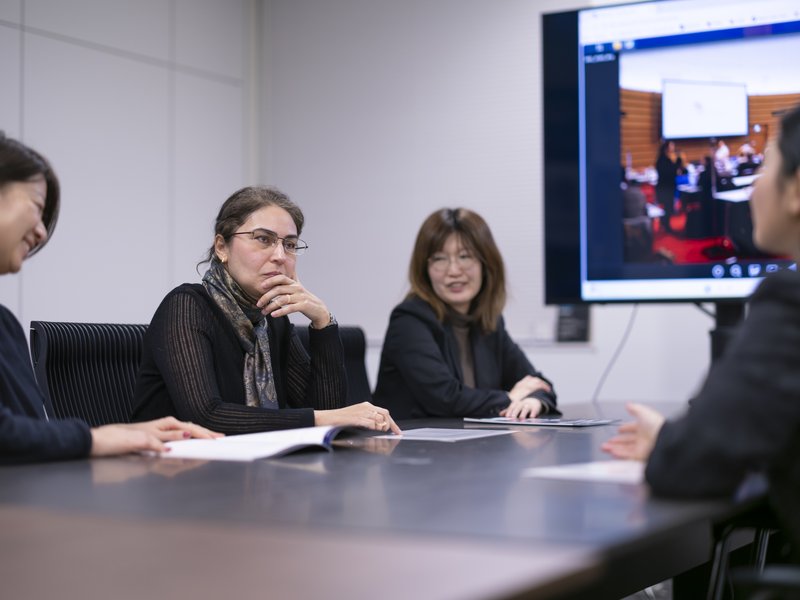
Seminars and other events organized by Bidadi and her colleagues are planned in close collaboration with WPI-PRIMe’s PIs as well as its promotional team.
Flexible, Adaptable, International: The Ideal WPI-PRIMe Applicant
The ideal WPI-PRIMe member, Bidadi says, is “international, open-minded, flexible, and adaptable.”
One useful quality for applicants is a willingness to ask questions, to ensure that a potential position is a good fit for their research. “Applicants should be asking, ‘What’s going on? What’s happening with these projects? What kind of support is there?'” says Bidadi.
This is particularly important at WPI-PRIMe because of the center’s wide-ranging efforts to create an entirely new field. Current research is focused on a carefully selected set of organs and diseases, including liver disorders, obesity, ocular degeneration, and cardiac failure. Alongside cutting-edge research on these topics, integrating biomedical science with information science, the institute also studies the ethical, social, and legal ramifications of possible new procedures and treatments.
Bidadi is optimistic about the future at the center and looks forward to developing both professionally and personally. “I plan to keep up to date with AI and technology,” she says. “And since I’m still in Japan, I will also be engaging with culture and language more deeply.” She already practices kyudo, the Japanese art of archery, which she credits with teaching cultural lessons that go far beyond simply drawing a bow.
“And, of course,” she says, “I plan to do my best for WPI-PRIMe!”
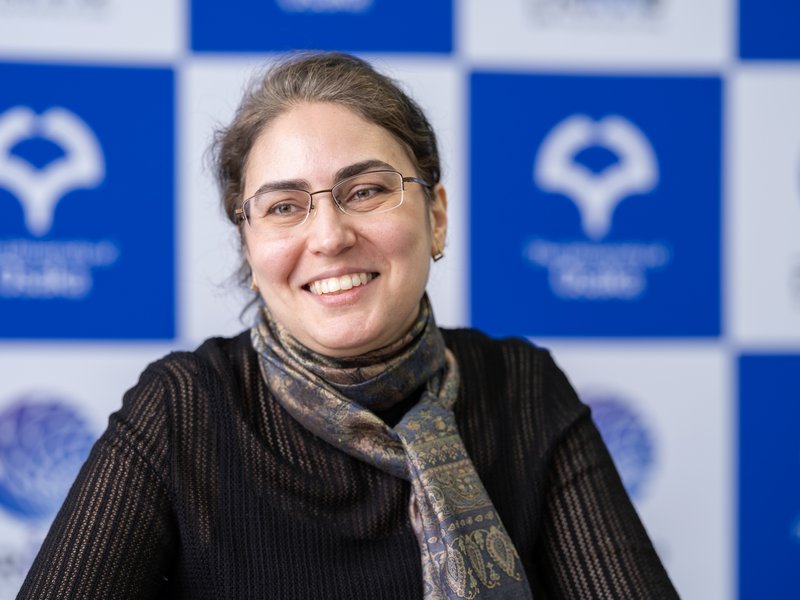
Haniyeh Bidadi
Ph.D. in Biotechnology, University of Tsukuba (2010)Research Fellow, University of Tsukuba (2010–)
Postdoctoral Researcher, Iwate University, Iwate (2013–2014)
Assistant Professor, University of Tsukuba (2014–2018)
Senior Researcher, PrevenTec Inc., Ibaraki (2018–2021)
Adjunct Assistant Professor, Temple University Japan Office
Associate Professor (lecturer), WPI-PRIMe, The University of Osaka (2023–)